By Douglas Borthwick · November 28, 2026
A loyalty program breach is a good reminder to look at where your own roster lives, and how many copies of it are floating around.
By Douglas Borthwick · November 28, 2026
Ethiopian Airlines is investigating a breach of its ShebaMiles loyalty program. If you run a youth sports club, a PTA or a booster club, you may know a smaller version of that problem: a roster that gets copied to every local shop offering your members a discount, sitting in inboxes you don't control.
Ethiopian Airlines, Africa's biggest carrier, told ShebaMiles members on November 18 about what it called a cybersecurity incident of limited scope, as teiss reported. The airline said there's currently no evidence financial information was accessed, but it hasn't said what data was involved, when the incident happened, or how many members were affected. ShebaMiles had more than 5.38 million members last year, though that's the size of the program, not the number of people this breach touched. Flights weren't disrupted, and CEO Mesfin Tasew told Reuters an investigation is under way. Members are being told to stay alert to suspicious or unsolicited messages.
Behind every loyalty account is a real person who now has to wonder what information might have been exposed. That's worth sitting with for a second before moving on to what it has to do with your club.
A program like ShebaMiles keeps one big account for every member: name, email, flight history, miles balance. That's how it knows who you are and what you've earned. It's also exactly what someone who breaks in is after.
Your club's version is smaller but shaped the same way. You keep a list of families. When the pizza place down the street wants to give your members a discount, the simplest answer can seem to be emailing them a copy of the list, or printing one for the counter. Then the sporting goods store wants its own copy. Then the cafe. Each copy is good for exactly as long as it takes someone to graduate, move, or quietly stop playing, and then it's just stale and sitting there.
With Bothy Pass, the store never gets a copy of your list at all. The check tells the store only that the person in front of it is a member, and what perk the store has set for them. There is no member list at the store to lose, because the store never held one in the first place.
Your own list still exists, and that's fine. It stays in your Bothy Dashboard, private to the people who run your club. Nobody is handing copies around.
You sign up with Bothy, add your club's name and logo, and make the pass. That takes about ten minutes, no code involved. You invite members by email or upload a list, and each one accepts with a 6-digit code and is ready in about a minute.
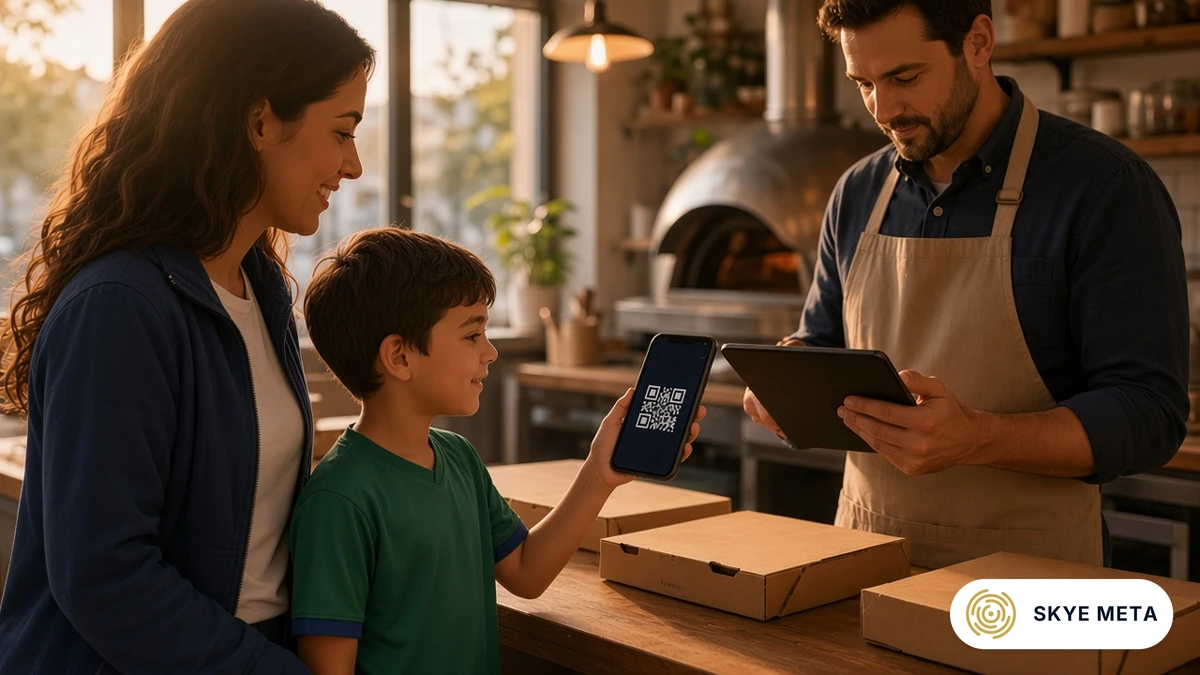
The store's part is just as simple. Whoever is behind the counter opens the Bothy Scanner on a phone, tablet or laptop they already have, nothing to buy or install. When a member shows their pass, the screen says recognized with discount, recognized with no perk, or not recognized. That's the whole interaction. The store sets whatever perk it wants to offer, and can change it any time. For the store, it's a way to bring more local families through the door without running another loyalty program or keeping somebody else's membership list.
Setting up your club's pass is free, no card needed. Here is the whole price list.
Your club
Free for 12 months
For the Founding 50 communities. Then $49 a month or $350 a year, with every tool and your first 50 member seats included. More seats: $20 per 50, one time.
Each store
From $49 a month
Or $490 a year. Includes 500 visits a month from other communities' members. A store's own community members never count.
Your members
Always free
Members never pay for the pass. They pay for their pizza the same as always, with cash, card or mobile pay.
This is the question every organizer asks eventually. Say a family moves away midseason. You remove them from your Bothy Dashboard, and from the next time anyone checks their pass, they're no longer recognized. No chasing down the stores to tell them to cross a name off a list, because there was never a list at the store to begin with.
One honest limit worth saying plainly: there are no points to build up here, and no tiers. The pass says one thing, that someone is a member, and the store decides what that's worth. Underneath, each check is a signed yes or no from the condition-based access API Skye Meta builds on, which is about as deep as you ever need to think about it.
Your local businesses don't need to know who your members are. They just need to know they're members.